Monthly Archives: May 2014

I Can’t Drive 55

TEACH YOURSELF TO DRIVE STICK SHIFT IN 20 EASY STEPS!

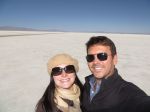
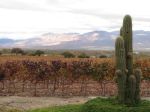
1. First, determine that you want to take a four-day road trip around the north of Argentina, or as they call it, “el Norte.” Apparently the landscape is beautiful, the wine is cheap and plentiful, and it’s the most Andean part of Argentina. Determine that the best way to do this is by renting a car. All the guidebooks will tell you it’s the best way to get around: on your own time, with your own itinerary. We chose to start from the home-base of Salta, head south to Cafayete for some wine tasting, then head north again to Cachi via some beautiful rugged terrain, and ultimately wind up north of Salta in the Jujuy province to see the “Salinas Grandes” salt flats. By the way, “Jujuy” is pronounced like this: “HOY-HOY!!” That’s how we should all answer our phones from now on – “Hoy-Hoy!…May I ask who’s calling?…Just a minute, please…AMY! IT’S YOUR PAROLE OFFICER – THE ANKLE BRACELET’S COMING OFF!!”

2. Having settled on renting a car, rent a vehicle from one of the local agencies. In doing this, find out that you really only have two options: pay an arm and a leg for a 4×4 automatic SUV, or go on the cheap with an older, smaller Renault manual transmission vehicle with nearly 100,000 kilometers on it. We chose the latter, from Avis, because Amy’s a member, and because I’m…thrifty.

3. BIG STEP: Realize you’re nearly 46 years old and have only successfully driven a manual transmission car ONCE, in college, under circumstances you would rather not get into for legal and ethical reasons, but suffice it to say that people needed to get home, and you were the most sober, and it was mostly downhill, on empty streets, in a farming community in Ohio.

4. Pick up the car at the local Salta airport. Drive the car around the parking lot for twenty minutes, trying to get the feel for things. Stall out repeatedly while trying to get into first gear. Do this in front of the taxi stand, the police post, the long term parking booth, and once or twice in front of the Avis office itself. Smell the clutch burning. Smell your forehead burning. Successfully put the car into gear three or four times (non-consecutively) over the course of twenty minutes. Decide that with this 15% success rate of putting the car in gear, it’s time to hit the open road, in a foreign country, in a language you can barely speak.

5. Pull up to the airport gate. Wait for the arm of the gate to go up. Close your eyes and shift into first. Slowly let the clutch out. Stutter and jump forward a bit. As the car shakes, it slowly moves forward, and…you’re in gear. Continue to drive forward and hope you don’t have to stop for the next 180 kilometers.

6. Find out 10 seconds later that you’re at a red light. Cars pull up behind you. Slowly let out the clutch and start hitting the gas. Stall out.

7. Hit another ten or so red lights before getting on any highway of sorts. Stall out once or twice, and one time, let out the clutch so fast while jamming the gas pedal, that you chirp the tires, burn rubber, and nearly fishtail through a busy intersection.

8. After a mostly uneventful journey of 180 or so kilometers on country roads, shifting through the upper gears, pull into your first destination, Cafayete. Navigate the town, and the gears, with passable skill. Pull into a parking spot and thank Jesus. Feel what Jim McKay called “the thrill of victory!” Check into your hotel.

9. Having checked into the hotel, decide to explore town and see a few of the local wineries. Get in the car, turn the ignition…and realize you have no idea how to put the car in reverse to get out of your parking spot. Feel what Jim McKay called “the agony of defeat.”

10. Have your wife get out of the car and stop a local gentleman about 70 years old or so who’s been busy taking photos of the lovely colonial square you’re parked on. Explain to this confused older man, in terribly broken Spanish, that you have no idea what you’re doing and, by the way, how do you put the damn car in reverse? Explain that it’s your first time driving stick (thinking better than to discuss in broken Spanish about that one time in college). Explain that you’re actually doing pretty good going forward, but going in reverse has become a new and quite timely challenge.

11. Have the gentleman lean in the car, through the open window, and show you that you have to pull up on the stick to put it in reverse. Get excited about this newfound information, which most high-school kids know. While he’s still leaning in the open window, take your foot off the clutch. Have the car jolt backwards a few feet, with the older gentleman still waist deep in your driver’s side window, still holding his expensive German-made camera. Apologize profusely. Have a few laughs, and a handshake of gratitude. For the first time ever, at nearly age 46, drive a manual transmission car in reverse.

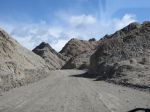
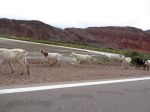
12. The next day, drive 150 kilometers to Cachi. Drive through the following terrain:

Do this while driving an economy-sized French-made manual transmission vehicle that you haven’t really mastered. Learn that going up steep, rocky grades requires something called “down-shifting.” Stall out numerous times in very awkward locations, and several times, roll the car backward, in neutral, to a point where you can put the car in first gear without flying off a mountain road, killing you and your wife.

13. Drive over 100 kilometers on a one-lane gravel road. Feel every bump, every jolt, and every rock at every turn. Know that at some point, you will come face-to-face with an oncoming truck, and you will have to back up, or slow down, or come to a complete stop on a surface that you would rather not back up, slow down, or come to a complete stop on.

14. Be reminded by your wife, on several occasions, to stay on the right side of the road. Realize that the last four months of your life (which included car rentals in South Africa, Australia, and New Zealand), you’ve driven on the left. Keep hitting the windshield washer instead of the turn indicator.

15. Stop to take a picture of a mountain. Stall out. Stop to take a picture of a cactus. Stall out. Stop to take a picture of a 200 year-old church. Stall out, restart the car, and stall out again. Stop to take pictures of some goats. Stall out again. Realize the toughest part of your learning stick shift is not the actual shifting, it’s the “taking the car out of gear” part when you stop.

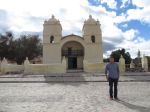
16. Pull into an old pueblo town for lunch. Stall out, three times, in front of the police station, with the police laughing at you. This is what’s called “a confidence builder.” Drive on to Cachi and spend the night.

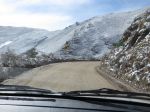
17. The next day, leave Cachi, and head towards Salta, and eventually Jujuy (“Hoy-Hoy!…May I ask who’s calling?…Just a minute, please…AMY! IT’S THE PROCOTOLOGIST – YOUR LAB RESULTS ARE BACK!!”). Climb a 10,000-foot mountain pass covered in snow. Yes, snow. Deal with snow, treacherous road conditions, and narrow mountain roads while finally figuring out how to “down-shift” on the uphills. Cross the mountain pass and start your descent. Only stall out once or twice.

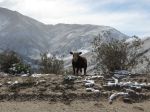
18. While descending down the winding, single-lane mountain road, this is the best opportunity for your accelerator to GET STUCK. I’m serious! Like a scene in a James Bond movie, this is where your accelerator will become stuck on a narrow, winding, unpaved, snowy mountain road and your car will decide (against your wishes) that “cruise control” is now mandatory; that without STANDING on the brakes, your car would prefer to go over 100kph downhill; and that the only way for you to escape death is to turn on your hazards, put in the clutch, turn off the car, and coast to the safest place you can find without getting killed by a passing motorist. Turn the car on and off a few times, with the RPM gauge jumping to 5000rpm every time, and revving like it’s about to explode. Pump the gas pedal when the car’s off, hoping to “unstick” something, and try driving again, even with the engine revving. Do this repeatedly, driving each time until the car is going at an unsafe speed, about 200 meters down the road from when you last turned off the car. After traveling this way for about a kilometer and continually turning the car on and off, get lucky, and have the car only rev to 2000rpm at one point. Drive like this, cautiously, for the next 70 kilometers until you get to Salta. This includes sitting at several stoplights with engine revving like you want to drag race the horse cart next to you; and putting the car into high gear while in dense traffic so the engine doesn’t wind out too loudly, scaring the local stray dogs and empanada vendors.

19. Drive immediately to the Avis car rental at the airport. Tell the Avis agent about your latest brush with death. Switch cars. Breathe a sigh of relief.

20. After three days and roughly sixteen hours of difficult driving, eventually reach Jujuy (“Hoy-Hoy!…May I ask who’s calling?…Just a minute, please…AMY! IT’S YOUR MOM – SHE FOUND YOUR TROLL DOLL COLLECTION!!”). Realize that with some hiccups along the way, you can now drive stick, and that with a few more days of practice, you’ll probably be pretty comfortable and pretty confident. Take a modicum of pride. Stall out at the stoplight in front of your hotel, while the teenagers laugh at you.

POSTSCRIPT:

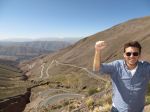
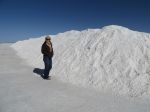
The following day, we drove from Jujuy (“Hoy-Hoy!…May I ask who’s calling?…Just a minute, please…AMY! IT’S YOUR ACCOUNTANT – YOU CAN’T WRITE OFF DYE JOBS AS A BUSINESS EXPENSE!!”) to the Salinas Grandes salt flats. This took us two hours through a nearly 14,000 foot mountain pass with huge switchbacks and precipitous drops. It was scary as hell. But it was also thrilling. And the best part was that I was able to navigate it without too many problems. Down-shifting came naturally, I’ve had no problems going in reverse, and I may have stalled out only once pulling out of an scenic overlook. I still forget to put the clutch in when stopping, so we’ve had a bunch of very jolting stops when parking, but all-in-all it was a good day. Now that we’re back in Salta, and we’ve dropped off the car, I think I pretty much have it down – just enough to forget entirely when we’ve got an automatic in Europe.
Categories: Uncategorized | 4 Comments

Welcome to the Jungle/Mr. Brownstone

This is a story about, well…poop. And for that I am sorry. Reader discretion is advised.

This poop story all started a little over a month ago, when Amy and I embarked on a sixteen-day safari across southern Africa. We traveled through South Africa, Zimbabwe, and Botswana. We traveled in a big red safari truck. We camped in tents. We saw elephants, zebras, giraffes, hippos, and much more. And it was awesome.
truck better

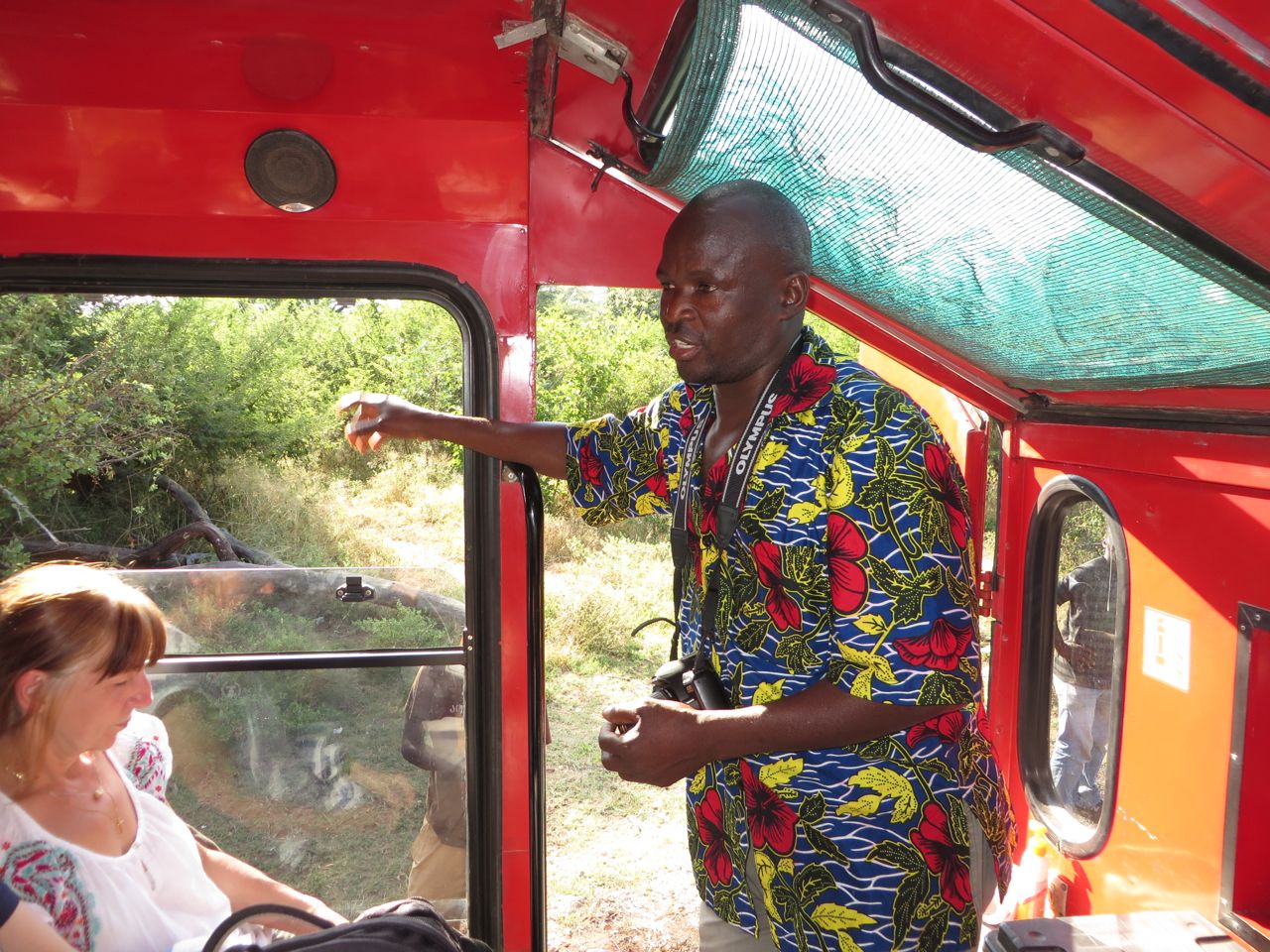
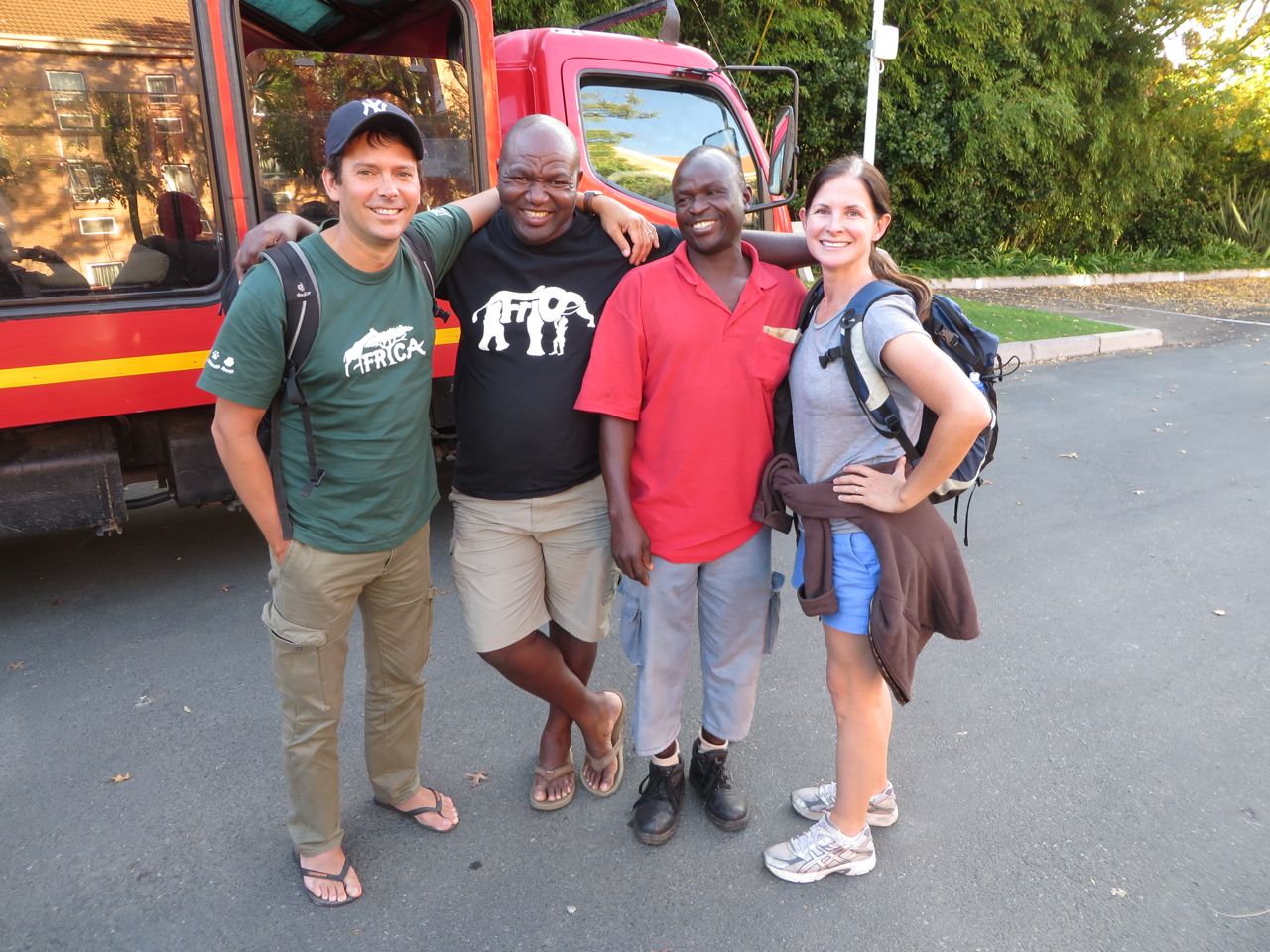
Things kicked off one very early pre-dawn morning in Johannesburg, South Africa, where we met our guides, Big Jeff and Little Jeff, of South Africa and Zimbabwe respectively. Big Jeff, who was more the logistics man, detailed how life would be: sharing tents, sharing cooking and cleaning duties, and sharing a safari vehicle that he dubbed “The Flying Red Elephant.”

big j

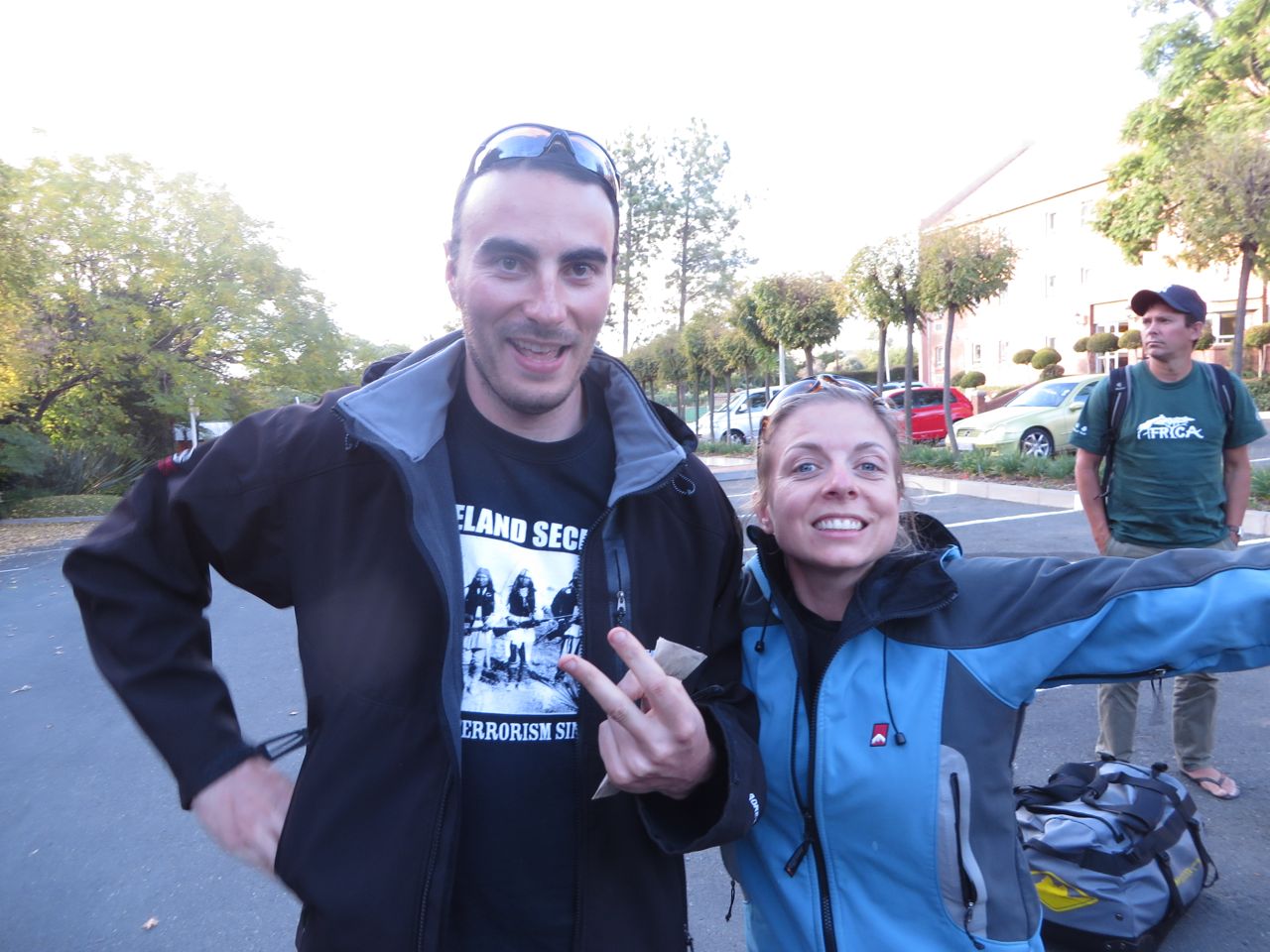
We also met our fellow campers – eight friendly Germans (who spoke considerably better English than we spoke German – sorry Frau Champagne), and a young couple, Paula (from Argentina) and Andre (from Italy) who now live in Calgary.

3 truck selfie

Little Jeff, who held an encyclopedic knowledge of African flora and fauna, gave us the first day’s itinerary – our first “briefing,” as he called it. We’d drive for six to seven hours, and spend that first afternoon looking for Africa’s “Big Five” in Kruger National Park. Along the way, we’d need to stop for fuel, and we could get some snacks. And then Little Jeff introduced the running theme of the trip: if needed, we could stop to go “Bushy Bushy.” This was Little Jeff’s term for the call of nature. For the rest of the trip, no one ever spoke of bathrooms, or restrooms, or toilets. From then on, it was always “Booshy-Boosh!!”

4 jefias briefing

After a long days journey, we arrived in Kruger National Park in northeast South Africa, where over the course of two days, we would do a number of game drives. It was a great introduction. We saw several elephants, up close, including one who trumpeted at us. We saw giraffes, and zebras, and baboons, plus a ton of impala. You see so much impala in southern Africa, you get sick of them sometimes.

At one point, the Flying Red Elephant began to swerve, and with it, we passengers were tossed around. Little Jeff stuck his head through the cab window and explained: “Our driver, Big Jeff, is a model of conservation. We won’t even run over the elephant dung, because it may contain dung beetles or other insects that are vital to the ecology of the area. So if we swerve erratically, it’s in an effort to preserve wildlife.” (In all honesty, Little Jeff, of Zimbabwe, was not as eloquent as that. But in the interest of clarity and brevity, I’ve summarized this for you. It really started like this: “Hello…um…small briefing…our truck…my brother Jeff is a conservationist…”)

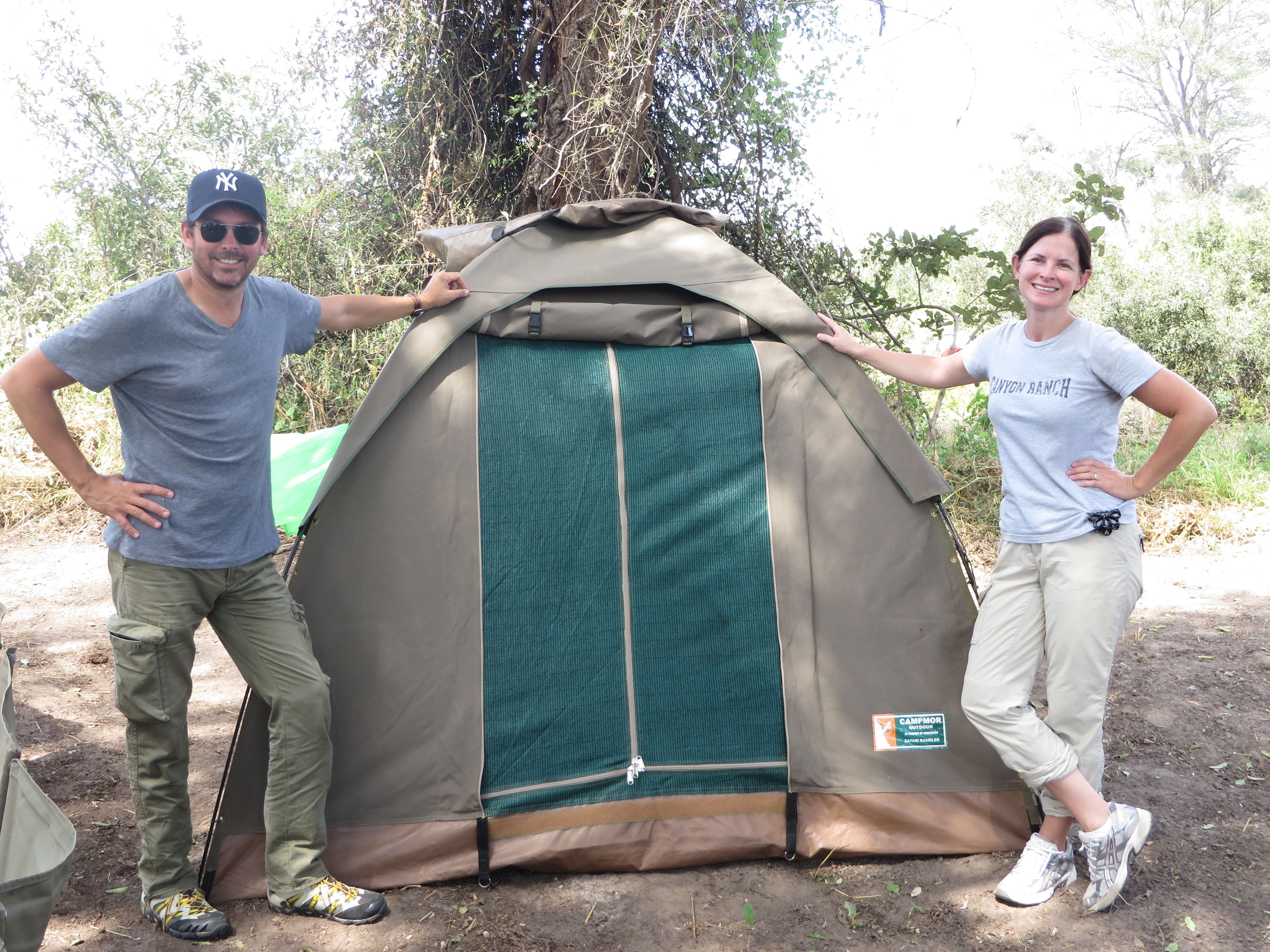
That night we had our first experience with the tents. They were sizeable two-man tents, and we quickly learned how to put them up and take them down. These would be our homes for the next few weeks, and they were actually fairly comfortable. There was only one issue with these tents: the zippers were pretty loud, and the outside door flap was held in place by a few feet of thick Velcro. All night, you heard a symphony of zippers being zipped and Velcro being ripped. This, friends, was the sound of Bushy-Bushy.

IMG_7664

The next morning, we got a lesson in animal bushy-bushy. After swerving on the road some more, Little Jeff poked his head through – briefing! – and explained to us that the roads that morning would be covered with elephant dung. It turns out elephants like the heat of the asphalt, and will travel by road at night, dumping their load along the way. And what a load, folks. Elephants are grazers, and these massive animals pretty much eat all day. This produces bowling ball sized dung, each weighing about 2.5 kilos – over five pounds. And each time they go, they drop about five of these balls.

If you read our post about the animals in Australia, you know that Amy is a bit of a poop expert (having correctly identified kangaroo and koala turds). Well, this new knowledge about elephant dung fascinated Amy, the Turdmaster General, and as we drove down the road, she would point along the way: “Five balls!…(another hundred yards)…five balls!…hey, there’s only four balls there (disappointment)…five balls!! (victory!)”

This now became another running theme for the trip. What had started simply as “Bushy Bushy” now became more defined, more illustrative:

“I’ve got to go bushy-bushy.”
“Do you have to go bushy-bush, or do you have to go five balls?”
“Well, it’s probably only two to three balls, but it sure ain’t bushy-bush…”

Armed with this puerile technicality, we pressed on into Zimbabwe. I can’t really speak to the politics of the country, which I know is a bit questionable, but Zimbabwe was otherwise a bit of a revelation. We first stopped near the town of Masvingo and the ruins of Great Zimbabwe, a stone city structure that rivals Machu Picchu and the Great Wall of China in its masonry. It was really pretty fascinating, I’m surprised it’s not more famous. It’s a UNESCO World Heritage site, but I’d never heard of it before.

6 zim

The next day we camped near the town of Matapos, where the highlight was a bush walk that ended with an up-close encounter with a small family of white rhinos. That was simply incredible, being that close, and totally unprotected.

We also did a game drive through Hwange National Park, a beautiful game park where we saw many of the large animals we saw in Kruger, but also wildebeest, warthog, ostrich, and a wealth of beautiful, colorful birds.

But after nearly a week on the road, people were getting restless. Of the “Big Five,” we’d seen elephants, African buffalo, and rhinos. But no big cats: no lions, no leopards, and no cheetahs either (though not part of the Big Five). Finally, frustrated, Andre said what everyone was thinking, in his Italian accent: “Whare are-a de fooking-a leons?!” We’d have to wait.

But we did take something away from Hwange. During our stay there, Amy, the Minister of Fecal Affairs, sighted more five balls, and now moved on to spotting giraffe dung with regularity. Back at camp, she and I were discussing “turds.” Paula overheard this and asked, “what are these, ‘turds?’” Amy explained, in her own delicate way, marking our continuing contribution to international relations. You can thank us later, Nobel Committee.

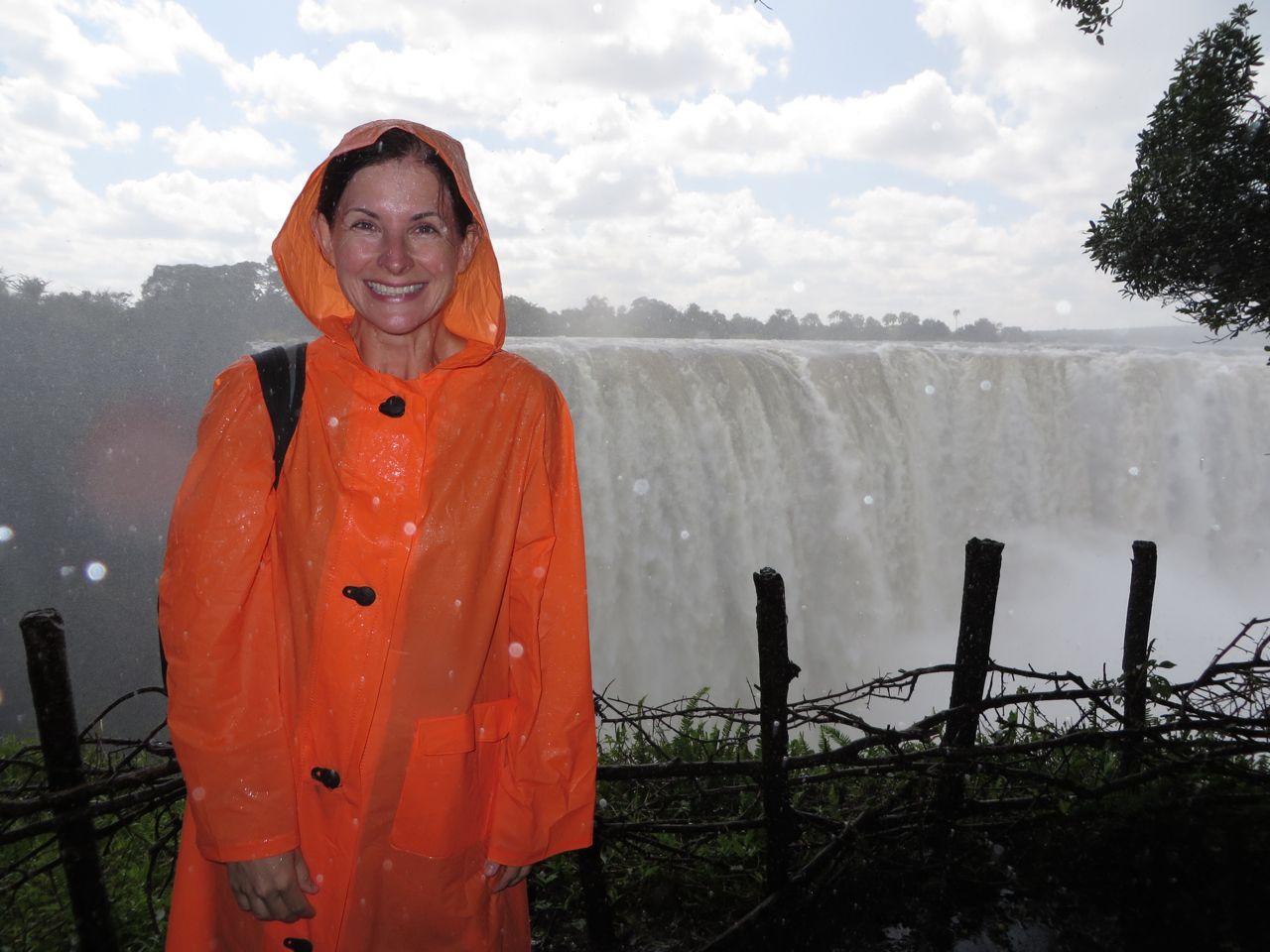
Eventually we arrived at Victoria Falls, which turns out to be the Niagara Falls of Africa: an incredible force of nature, bordering two countries, and full of crummy souvenir stores. Victoria Falls is impressive as a natural wonder, breathtaking and absolutely worth the visit, but not much of a town. After a quick stay – enough to see the falls and do some laundry – our group crossed the border into Botswana.

9 vic falls

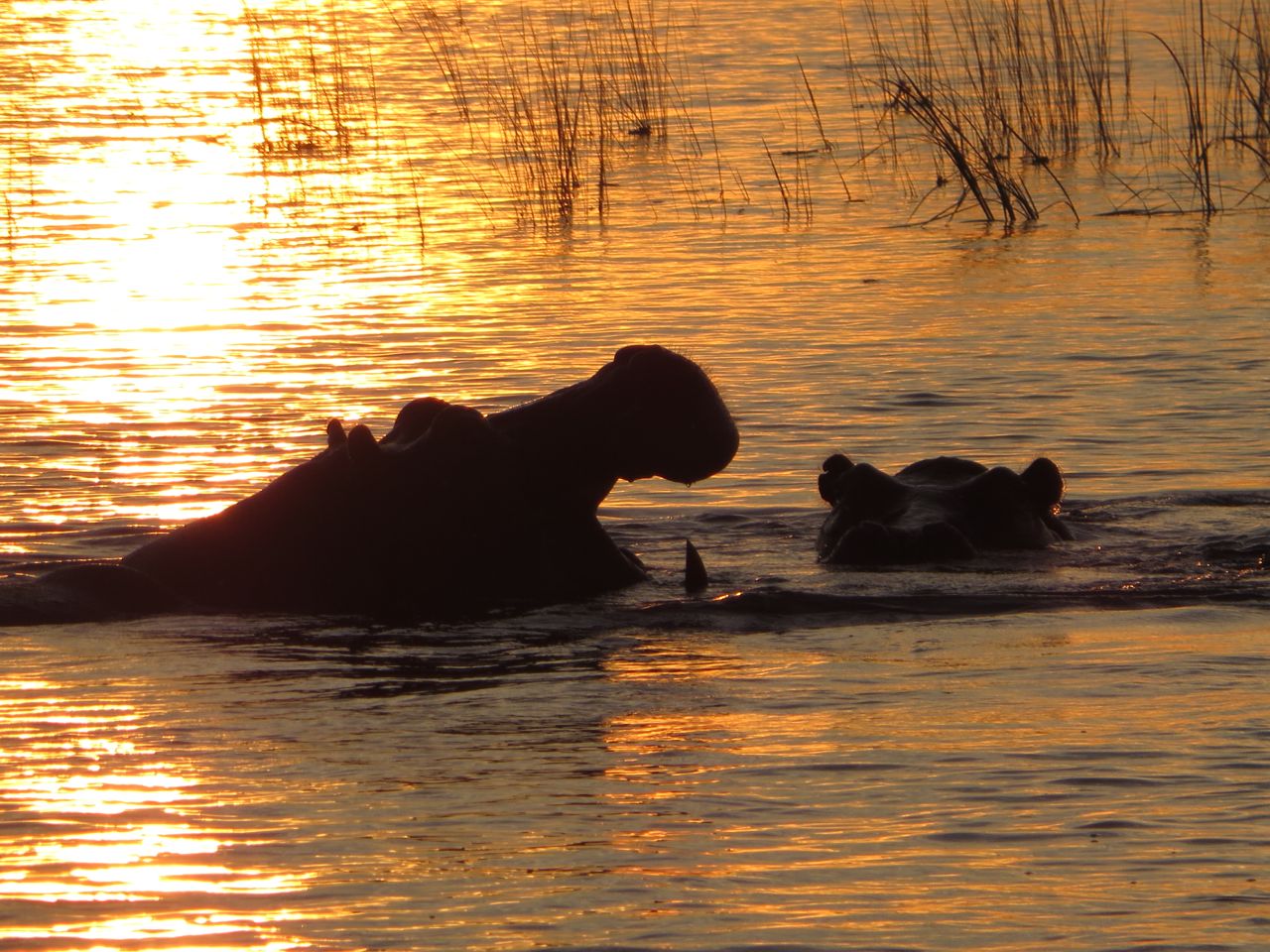
And how were we welcomed in Botswana? By a herd of elephants, minutes after the border. Big Jeff explained that with its conservationist efforts, Botswana was rife with African wildlife. That night we went for a game cruise on the Chobe River, saw more elephants, and listened to the bellowing of frolicking hippos at sunset. I think this is the point I turned to Amy, stunned, and said, “we’re in BOTSWANA…”

9 sunset hips

The next day we went for a game drive in Chobe National Park. This was the site of two breakthroughs. First, we saw lions. Lots of lions. One big male lion, a few lionesses, and a brood of juvenile lions, on the hunt for buffalo.

But that wasn’t the big breakthrough. Amy, by now having officially declared her major as “Dung,” made her usual five-ball sighting. I chimed in: “Five balls!” And then a surprise: Andre, seated just in front of us, turned around and quietly stated, “Two point-a five kilos…” Like Dr. Livingstone, we had won a convert in darkest Africa.

16 ap

A few days later, we came to the most unique and memorable part of our trip. We were leaving the safety of the land and heading onto the waters of the Okavango Delta for two nights of wild camping, riding in dugout canoes. It was an experience we will not soon forget.

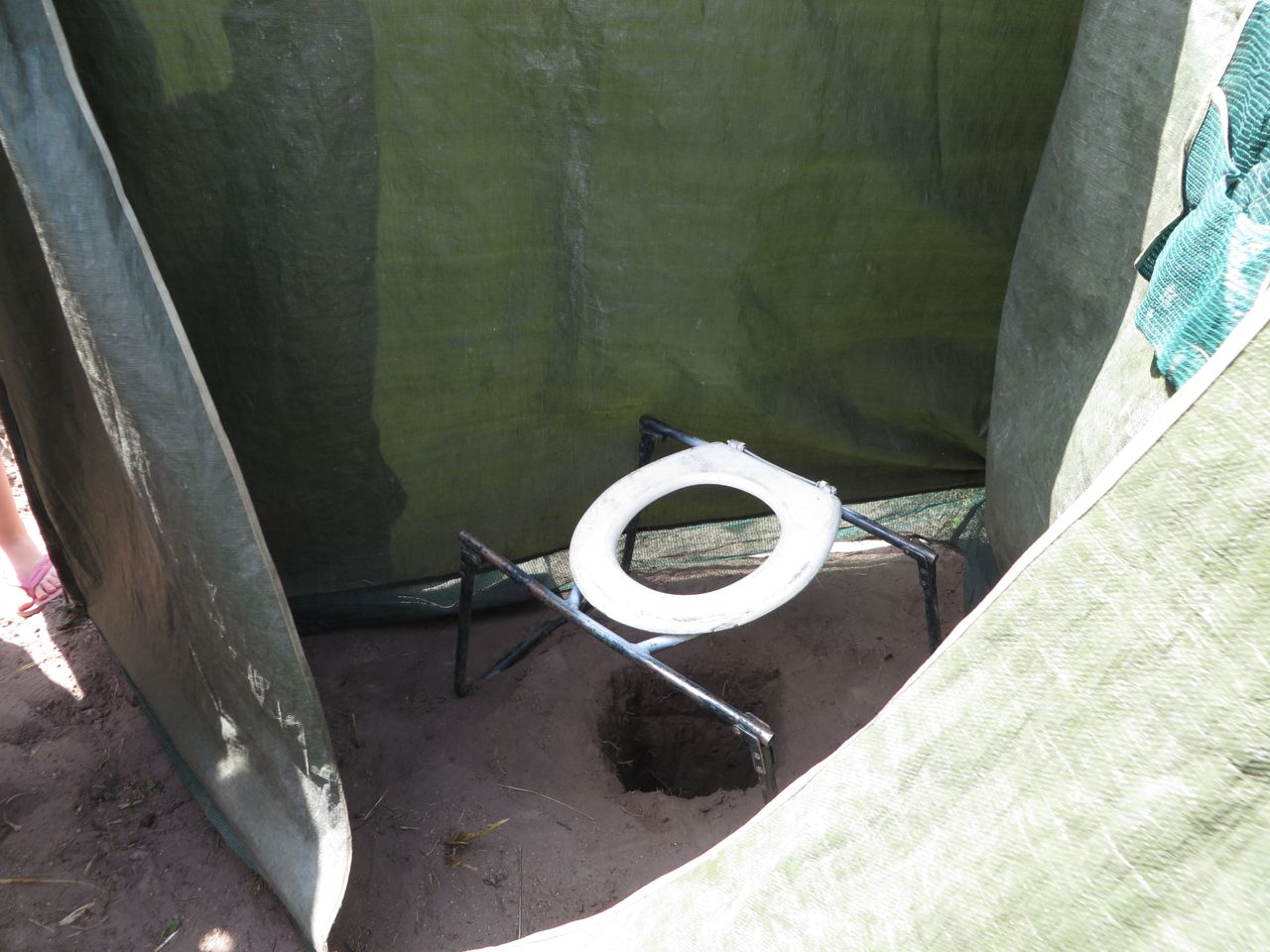
All our gear was loaded on to the canoes, which were poled around the shallow waters by local guides, just like gondoliers in Venice. After about an hour on the water, we arrived at camp, set up our tents, and were told how we’d live out in the wild: cooking on an open fire, with no gas burners like our other campsites. A bucket shower (which only one person used). And our sanitary facilities – this pit toilet, dug into the ground in a clearing well behind our campsite.

13 pot

Little Jeff continued the briefing: never stray into the wild – there were animals out there that could kill you. If a guide tells you to move, you move. And at night, when going “Bushy Bushy,” take your tent-mate, and shine a flashlight to look for eyes. If you see eyes – stay in your tent! Otherwise, relax, have fun, and enjoy the bush.

(A side note here: one of the greatest things I heard on the entire trip is an African proverb Little Jeff used repeatedly. Goes like this: “There are many ways to kill a baboon.” We skin cats; in southern Africa, apparently, they kill baboons.)

In the afternoon we took a bush walk, and came face-to-face (at a reliable distance) with a few elephants. Our local guide warned us – it was time to move – this elephant was heading in our direction and could be dangerous. We returned to camp, and in the waters next to our site, a hippo, one of the more dangerous animals in Africa, bellowed as the sun set. Baboons howled in the distance. We were surrounded by wildlife, and it was humbling.

We had a big pasta dinner, and then with the fire dying down, and complete darkness creeping in on us, we all went to bed. There was a mist in the air, and as the weather cooled, the hippos would soon come out of the water. The noises of the jungle enveloped us – the hippos bellowing somewhere close by, a baboon howling over on the other side of camp, and an owl in a tree that sounded intimidating. I couldn’t sleep, hearing (or imagining) noises outside the tent. And then at 2:00am, full of pasta and completely carbo-loaded, I was overcome by the call of Bushy-Bushy. This led to what I call “The Scariest Four Minutes of Your Life.”

Turns out Amy was up as well. She and I got dressed, listening to the sounds of lethal animals only footsteps from our campsite. The owl continued his threats. The hippo (or hippos!), who will kill anyone in its path, was somewhere nearby, undoubtedly on its path, awaiting victims. The baboons were out there, plotting. It was pitch black out; who knew what lurked on the fifty-yard dash to the pit toilet. We ventured forward, timidly.

Let me tell you about our flashlight: we bought a cheap dime-store flashlight before the trip; something we picked up last minute while buying, believe it or not, a doorstop and a whistle (long story). We used it a few times when the power went out in India, and during the campervan portion of our New Zealand stay. But it’s poorly made, and after seven months rattling around in my luggage, the beam isn’t that strong anymore, the batteries are weak, and the bulb has a tendency to flicker, or just go out completely. You have to shake it or hit it, like trying to get the last drop of ketchup out of the bottle. This was not the ideal flashlight to be spotting homicidal hippos. Other campers had strong beams capable of sighting enemy aircraft or signaling outer space. We had something you could barely use to read an Archie comic book under your Star Wars blanket.

So after the unnerving sounds of zippers and Velcro (this will only anger the beasts!), we flashed the light out of the tent. We saw nothing but other tents and the dying fire – whew!… Then we crawled out and put on our flip-flops. I shined the flickering light around. Nothing but darkness, and the howling sounds of impending flesh being torn. We ventured towards the pit toilet.

Here’s the thing: it was absolute darkest night out. With the slight rain, there were no stars, and no moon; no source of light except some crappy penlight. There were animals SOMEWHERE out there. And we’d have to drop our pants over a small hole in the ground dug on the periphery of the jungle. I made Amy go first.

Meanwhile, I stood outside the toilet tent, alone in the mist, shining the pathetic light around so I could get a quick glimpse of whatever animal was out there before it ripped out my thorax. And, of course, the flashlight kept going out, and I’d have to keep hitting it with my hand. For those few seconds the light was out, in complete darkness, I was paralyzed with fear. It seemed as if Amy was taking forever, her bladder releasing the equivalent of Victoria Falls, while I waited for a hippo to trample me into the dirt like a human pit toilet. Remember that Lenten promise to stop swearing? It was long f***ing gone, people!

Soon enough, it was my turn. But pasta be damned, at this point there would be no five balls, no three balls – not one solitary ball. I didn’t even try. I took a quick leak and got the hell out of that pit-toilet tent. I held Amy’s hand and we cautiously walked back to our own tent, a single, weak beam of light flickering its way back through the darkness as we tripped over plants and shrubs and the withering bones of campers past. We un-Velcroed, unzipped, and leapt into the tent. Outside, the animals kept up their noisy terror, but inside our tent there was nothing but the sound of heaving lungs, as we caught our breaths after our brush with death, The Scariest Four Minutes of Your Life.

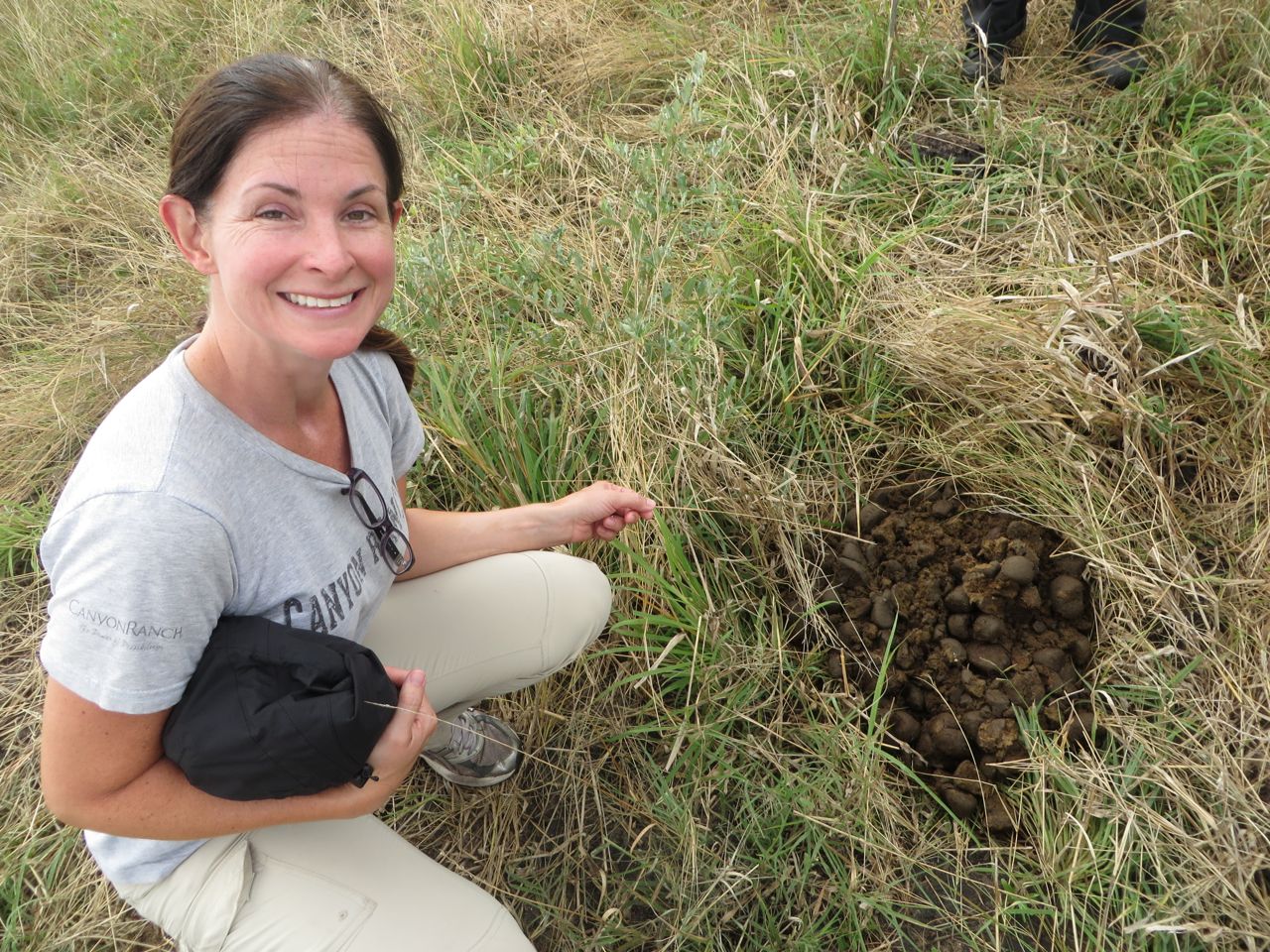
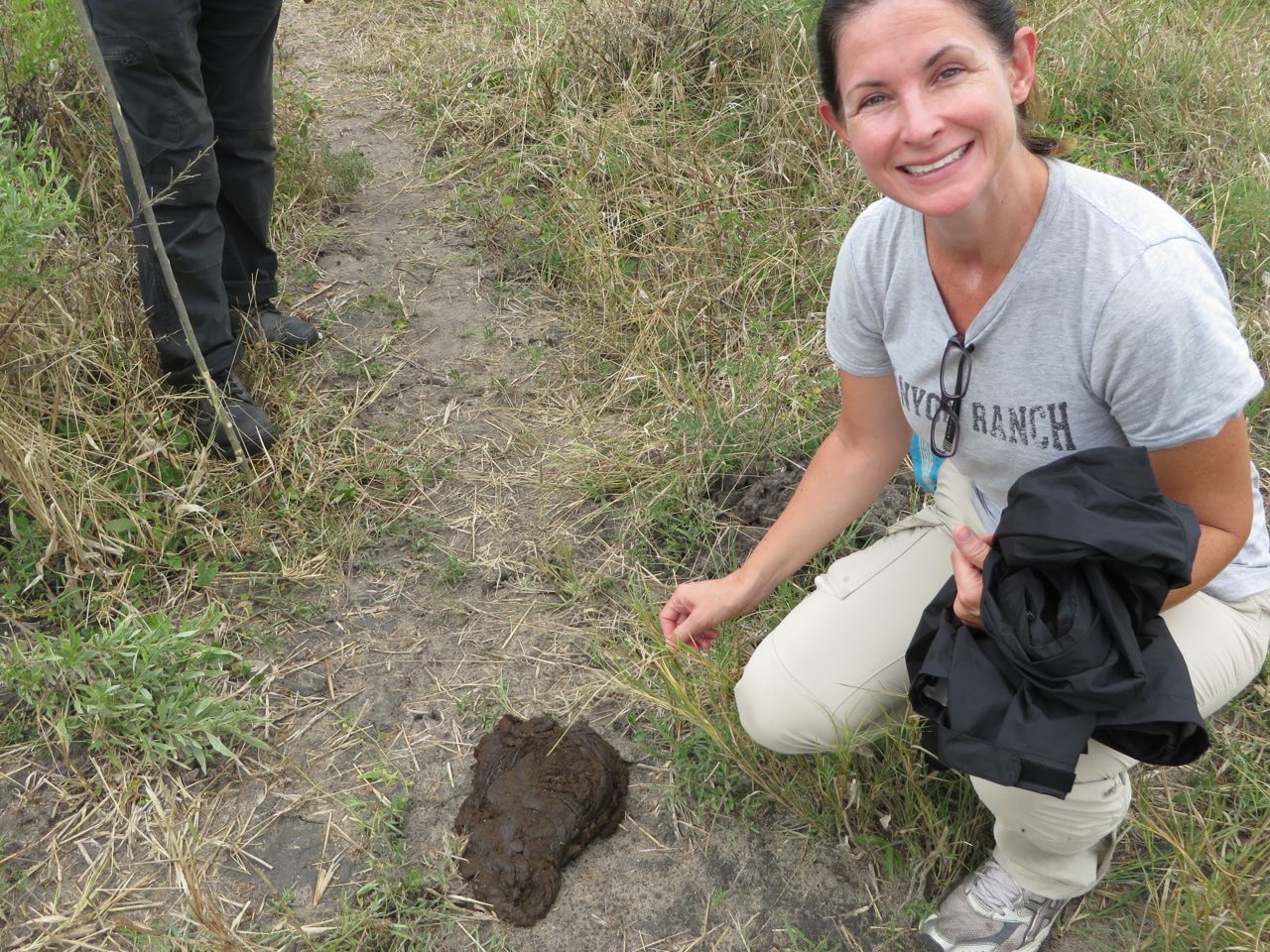
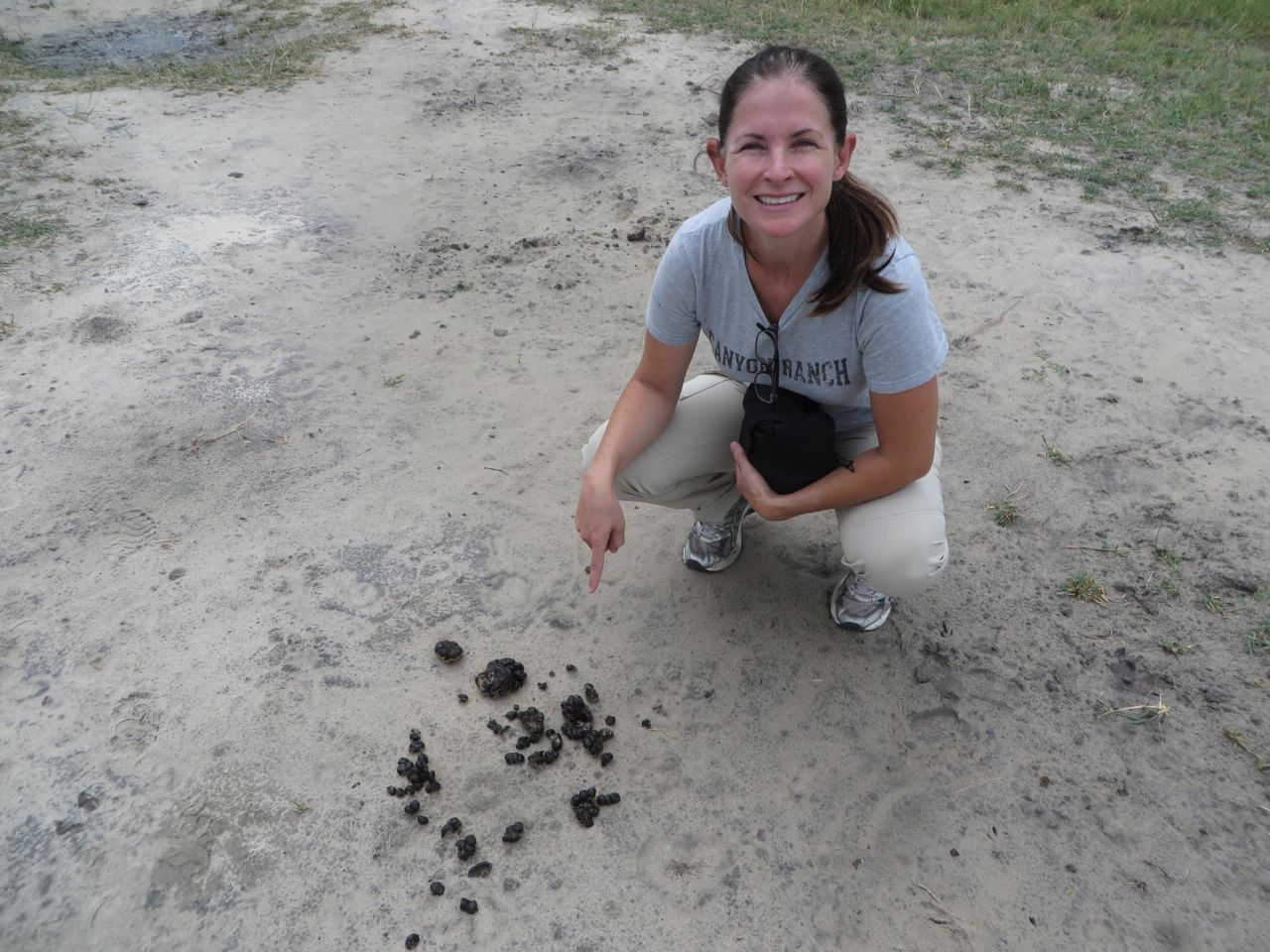
The next morning, with the sun safely in the sky, and our guides awake and making coffee, we prepared for the day’s bush walk, a nearly five-hour walk on one of the islands in the delta. This would be Amy’s crowning moment. We trailed the group most of the way because the Poop Whisperer was consulting with one of our local guides, Walter, about various dung, comparing notes from their respective doctoral research. And here, for your edification, are some photos of Amy and her new, steamy friends, along with some vital information so you, too, can recognize your African turds:

Elephant: as mentioned earlier, a grouping for four to five bowling ball sized turds, each weighing approximately 2.5 kilos (5 pounds). Mostly grasses. Tough to miss.

15 elle

Giraffe: dozens of acorn-shaped pellets, in a sizeable pile, somewhat scattered.

15 gir

Zebra: a massive pile of kiwi fruit to baseball sized turds. Interestingly, zebras often poop in the same spot. They kind of mark their turf.

15 zebra

African buffalo: If you’ve ever seen a cow pattie, you’ll easily recognize African buffalo. It’s a mess.

15 buff

Warthog: Looks like a big pile of oversized black beans, some loose, some in dense clumps.

15 warthog

You may be wondering about hippo. Well, we have no hippo dung photos. They basically spray the grasses they’ve eaten back onto more grass or bushes. You know it when you see it – like when your lawn mower blows the grass into the hedges. But imagine it three times the size.

The next day we left the delta, and after a final, fantastic day spotting rhino and a leopard in lower Botswana (Big Five complete!), our safari was over. We returned to Johannesburg, then flew to Cape Town for a relaxing week – including a lot of laundry and catching up with our emails, etc. – and then flew to South America, where we are now.

I’ll leave you with this, a poem co-written by Amy and me while out in the wilds of the Okavango Delta. It’s suitable for third-grade classrooms everywhere, and rivals some of the all-time greats, like “Diarrhea, Diarrhea” and “Milk, Milk, Lemonade…”:

“Bushy Bushy, brown and squishy,
Pushy pushy, from my tooshy.”

(I already apologized, right?)

last jeffs and us

Categories: Uncategorized | 5 Comments

Hermoso Apartamento en Argentina

TRAVEL MAPBuenosAires

Good morning from Buenos Aires! It’s day 223 of our trip and continent number 5 (check out John’s awesome map). We arrived in BA last night after just about 24 hours of travel. It was a long day but we were so happy to arrive to this sweet pad! Check it out!

We’ll be traveling around South America for 2 months (capping it off with the World Cup in Brazil!). Lot’s more to come (including mucho vino and carne asada)! Ciao!

Categories: Uncategorized | 3 Comments

Across the Universe

Welcome to Varanasi

Almost 20 years ago, I was having a conversation with my old Auntie Mame (yes, I have an Auntie Mame). We were talking about traveling. At that point in my young life, I had only been to France, England, Canada and the Caribbean. I asked Mame if she had ever been to Europe, and she said she had not. I was so surprised because I remember her telling me so many travel stories. I told her, ”Well, you MUST go! Paris and London are so fabulous!” Because, like, I knew, being such a seasoned traveler at age 27. She quickly said, “A” – my family calls me “A” – “London and Paris are just like New York. You have to go to the Far East…it’s like another planet!” And the first time I was in Asia, I totally got it. She was right. In Europe, with the Latin-based languages, you can still decipher menus and street signs. And my high-school French could still get me a glass of wine and directions to the bathroom. But in Asia, good luck using that high school French (except for parts of Vietnam)! But after four months traveling around Japan, China, Taiwan, Korea, Vietnam, Thailand, Laos, Malaysia, Indonesia…even Burma, for God’s sake…and a five-week “break” in New Zealand/Australia, we were ready for India. Or so we thought. “Another planet” didn’t even begin to adequately describe India. We were not ready.

Two emails should have warned me what we were in for… The first note is from my cousin who spent her honeymoon in India:

“India is an amazing, magnificent, terrifying, heartbreaking, and unbelievably beautiful place. Please be safe.”

The second is from a college friend, and an extremely seasoned world traveller:

“I loved it there. Absolutely crazy. Crazier than almost anything I’d ever seen. And amazing food.”

All I saw was “amazing, magnificent” …blah, blah, blah… “amazing food”…blah, blah, blah. “Terrifying”, “heartbreaking”, “crazy”, “be safe…”: missed all that. For the time being…

We started our month in India in Mumbai, and then traveled up to Rajasthan (Udaipur, Jodhpur and Jaipur). Then we trained over to Agra and the Taj Mahal. Up to Delhi. Then to Rishikesh/Lakshman Jhula, and finally ended in Varanasi. And everywhere we turned, India was an assault on the senses. To wit:

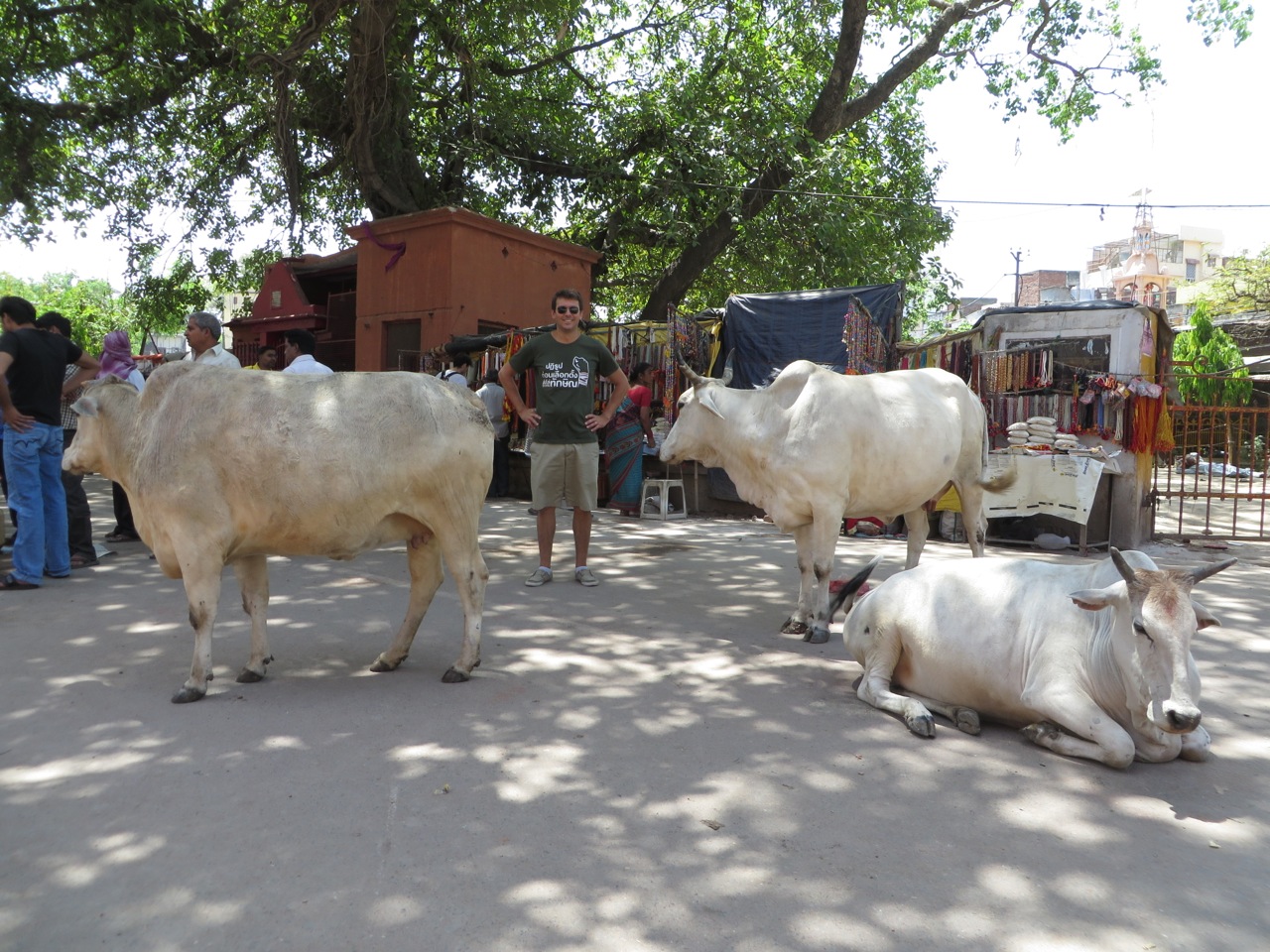
Smell: It’s true: India smells delicious. This is strange for 2 reasons: One, it’s so dang hot, you would think it would smell like B.O. And two, there are cows everywhere so you’d think it would smell like manure. (And it does, but only close to the cows.) But these two scents are not the predominant odors. The spices, the food, the smell of the flowers and the trees wafting through the hot air. I understand people’s use of the word “intoxicating” after spending time there. Even when they’re burning bodies in religious ceremonies in Varanasi, you can smell the smoke, but it’s not unpleasant or overwhelming. This mix of smells – from sandalwood to dung to body odor to everything else – it may not always smell delicious, but it is indeed fragrant, and ever-present.

cows

Taste: We had some amazing meals in India. Tikka Masala (of course), thalis, raita in many different flavors, the most delicious lassis, and so many other things I don’t remember the name of. After a month there, I did miss beef…and I’m still on a break from Indian food for now…but I’m really excited to get to London this fall and head straight to Brick Lane!

Touch: When I thought of India before actually going there, I thought of fantastic markets, crowded with tents and people, spices and textiles with incense clouding the air. Like that scene from Indiana Jones but without the murdering thieves/chase scene part. (I actually think that was set in Morrocco, but you get my point.) Well the real India lived up to this image in my head, with just one adjustment: Add about 100,000 more people to this market!

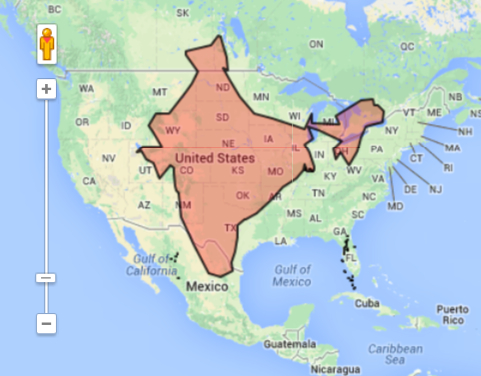
India is a VERY crowded place. Home to 1.2 billion people. In comparison, the population of the US is only 314 million people. And India is just 1.3 million square miles in area, where the US is 3.8 million square miles. Sorry, enough math. Just look at this map:

USvINDIA

Four times the people in 1/3 of the space. And these numbers don’t take into account all of the cows! And man, there are a lot of cows. And cars and scooters. Long story short, lots of people, lots of cows, lots of beeping. Those of you that know John well know he does not like crowds. John was out of luck. There was no where to escape the crowds. And those of you who know me well know I do not like to be touched by strangers. The good news for me was it’s not kosher in India for men to touch strange women, so there was no unwanted touching (thank God!). Strange men did try to “help” us with our luggage outside every hotel, airport, and train station. And a lot of guys did sidle up next to us and touch John’s arm, tugging him to come into this store or that one (which only made John want to “touch” some of those guys with five folded fingers of discipline). But the only “touching” story that I have is this one, which was kinda sweet…

One day, in Lakshman Jhula (a holy city, and a DRY town, by the way! Travel tip: BYOB!), we were crossing the very crowded pedestrian bridge over the River Ganges from one side of town to the other. On this bridge there are people, scooters, cows, cow pies, and monkeys that steal food and sunglasses. Well, this older Indian woman had some biscuits that she was feeding to a monkey (bad idea!). I passed her and looked over and smiled and she smiled back. Then she started walking next to me (and staring…a lot of staring in India) but she was smiling and she was a woman so it was ok. Then I thought she was going to hand me a biscuit so I could feed the monkeys, I guess. But she didn’t. She just brushed up against my hand with her hand. I was confused but didn’t think much of it. Then this older Indian guru (complete with robe and turban and no shoes) who was walking behind both of us laughed. He came up to me and said, “she wants to touch you…she thinks you are a big white angel.” If only he didn’t say “big” it would have been perfect.

(SIDE NOTE: I did get asked to have my picture taken an exorbitant amount of times. I felt famous! Or, I guess, I felt white. The same thing happened to us in China, but much, much less frequently.)

Sight: There are a lot of things you can’t un-see in India. Most of these things happen along the side of the train tracks as your going through a small town. There’s not much indoor plumbing happening in small-town India, and not many outhouses either. People are just squatting there, on the side of the tracks, doing their “morning business” for the world to see. No shame. Women can’t show their ankles in public, but they can pull up their sari and cop a squat just about anywhere.

Also, I’m not sure there’s anywhere else in the world you can see a public cremation. Lucky you, they don’t allow photography along the banks of the Ganges in Varanasi where these cremations take place. Hundreds of people (locals, tourists and cows, alike) all come out to watch and send their loved ones off in a blaze of glory.

In addition to the call of nature and burning corpses, there are certainly many other beautiful things to see in India, but you’ve already seen them in books, right?

Sound: If you read John’s “Crosstown Traffic” post, you know most of what we heard in India was taxi drivers trying to give us a ride (or rather, take us for a ride) and touts trying to sell us something. We also heard a cacophony of beeping. India isn’t a quiet place. Even at night, stray dogs howl incessantly.

We did hear some cool Bollywood songs, like this one:

Catchy, right?

The Beatles famously spent some time in Rishikesh getting their India on (the hippies are still hanging out there), and after their stay they wrote a number of songs that were influenced by Indian music and culture. I don’t know the full story behind John Lennon’s lyrics to “Across the Universe” but this line captures a bit of India for me:

Pools of sorrow, waves of joy are drifting through my opened mind…

But then he goes on to repeat, perhaps in defiance, “nothing’s gonna change my world, nothing’s gonna change my world…”

Well, India, you definitely changed my world. Namaste, Mom!

Taj booties!

Categories: Uncategorized | Leave a comment

Blog at WordPress.com.